Top Things to Do in Lesotho
6 must-see attractions and experiences
Lesotho sits entirely above 1,000 metres in elevation, one of only three countries on the planet that can claim this. That single fact dictates everything, from the sharp bite of mountain weather to the sturdy Basotho ponies that carry visitors across highland passes where roads give out. Landlocked within South Africa yet wholly itself, Lesotho offers an altitude experience without parallel in the region: cold, crystalline air laced with wood smoke drifting from village hearths, horizons of basalt peaks rolling in every direction, and a national culture defined by the mokorotlo, the conical woven hat whose silhouette appears on the national flag and in every craft market from Maseru to the highlands. First-timers should grasp that Lesotho's weather is emphatically seasonal, with genuine snowfall across the highlands between June and August and warm, sun-flooded afternoons from October through April. Maseru, the capital, makes the logical starting point. The well-known sandstone plateau of Thaba Bosiu rises visibly to its southeast, and the dramatic basalt formations near The Lion Rock Mountain give an immediate introduction to the volcanic geology that defines Lesotho's landscape. Push deeper and you will meet the Maletsunyane Falls plunging over a sheer cliff into a gorge of impressive depth, and the Afriski Mountain Resort transforming the Maluti range into a winter sports venue unlike anything else in sub-Saharan Africa. Safety across Lesotho is manageable for travelers who apply standard precautions: the highlands are quiet and the main routes connecting major attractions are passable in a standard vehicle throughout most of the year. What sets Lesotho apart is not spectacle alone but the intimacy of encounter. The country is compact enough that a single day can move you from the layered history of Thaba Bosiu Cultural Village through mountain passes that feel remote to the rim of the Maletsunyane gorge, where mist rises from the falls below and the evening light turns the basalt walls amber. The food grounds every journey in place, papa (maize porridge), dried peaches, mutton stew carrying the faint herbaceous taste of wild highland ingredients. Lesotho does not curate itself for outside eyes. It exists, at elevation, on its own terms.
Hand-Picked Experiences in Lesotho
The best of every kind, whatever you're in the mood for
Adventure & the Outdoors
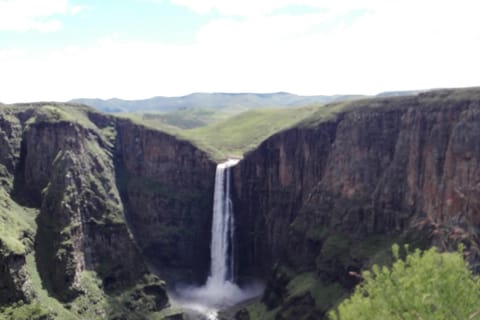
Maseru - Scenery Tour to the Waterfall
a guided tour to the waterfall reveals impressive scenery.
Insider tip bring a waterproof jacket as you will get wet.
Culture & History
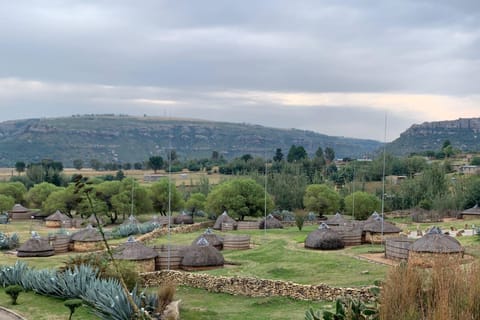
Lesotho: Historical and Cultural Heritage Tour
a tour reveals the historical and cultural heritage.
Insider tip expect an in-depth tour of historical and cultural heritage.
More to Explore
Even more of the best of Lesotho
Afriski Mountain Resort
Outdoor ActivitiesPerched at around 3,000 metres in the Maluti Mountains, Afriski Mountain Resort is sub-Saharan Africa's most serious ski destination north of the Western Cape, a place where the cold cuts sharply through your jacket in July and slopes gleam white against the tawny highland grassland surrounding them. Summer flips the script entirely: mountain bikers descend the same runs that skiers carved in winter, and hikers move through thin, clean-smelling air across trails that open onto some of the most expansive views in all of Lesotho. The wind across the peaks is constant, a low resonant pressure that underscores just how exposed and elemental this landscape feels.
Thaba Bosiu Cultural Village
Cultural ExperiencesThaba Bosiu, "mountain of the night" in Sesotho, is the flat-topped sandstone plateau where King Moshoeshoe I established and defended the Basotho nation in the nineteenth century, and the Thaba Bosiu Cultural Village at its base translates that weight of history into a direct, living encounter. Walk through reconstructed traditional homesteads and you will hear explanations of mokorotlo-weaving technique, the symbolism layered into different blanket patterns, and the sorghum-beer customs that still govern rural ceremony, delivered not as performance but as transmission from guides who grew up inside these traditions. The plateau itself looms overhead throughout, its chalky sandstone edges catching afternoon light in shades of ochre and deep rust.
Maletsunyane Falls
Natural WondersThe Maletsunyane Falls drop nearly 200 metres over a sheer basalt cliff into a churning pool far below, making them one of the longest single-drop waterfalls in southern Africa, and the sound at the rim is a deep, sustained roar that you feel in your chest before you see the water at all. Mist rising from the gorge carries a mineral coolness against your face that contrasts sharply with the warm highland sun at your back, and in the colder months a partial ice curtain sometimes forms at the cliff's edge, freezing the falls mid-motion in a spectacle that feels almost impossible at this latitude. Trails surrounding the falls allow you to experience the drop from multiple elevations, from the plateau lip to the valley floor, each position revealing a different scale of the thing.
Basotho Hat
Markets & ShoppingThe Basotho Hat in Maseru is a building shaped like the mokorotlo, the conical woven hat that is simultaneously Lesotho's national symbol and one of the most recognizable pieces of vernacular architecture in southern Africa, a structure that is orientation point, cultural marker, and functional craft shop all at once. Inside, the selection covers the full range of traditional Basotho material culture: hand-woven baskets, mohair blankets in bold geometric patterns whose raw-wool smell signals genuine quality, carved soapstone figures, and the hats themselves in sizes from decorative miniature to wearable. The building has become an instinctive first stop for visitors arriving in Maseru, a visual anchor that ties the commercial center of the city to the deeper identity of Lesotho.
Maletsunyane Information Centre
Museums & GalleriesThe Maletsunyane Information Centre sits at the entrance to the falls area and provides the kind of contextual grounding that transforms a straightforward viewpoint visit into a fully informed encounter with one of Lesotho's most significant natural features. Exhibits cover the geology of the basalt plateau, the ecology of the gorge's distinctive micro-climate where moisture and shade sustain plant communities found nowhere else on the highland plateau, and the history of the surrounding Semonkong area, a name that translates as "place of smoke," a direct reference to the mist column permanently rising from the falls below. Staff carry detailed practical knowledge of trail conditions and the optimal vantage points for different light conditions throughout the day.
The Lion Rock Mountain
Outdoor ActivitiesRising from the plateau near Maseru, The Lion Rock Mountain is a basalt formation whose silhouette, seen from the correct approach angle, resolves with sudden clarity into the shape of a recumbent lion, a likeness that becomes impossible to unsee and lends the hike a pleasantly expectant quality as you look for the right perspective. The trail moves through highland grassland alive with the chittering of weaverbirds and the dry rustle of grass in the wind underfoot, eventually reaching a summit from which the lowlands of Lesotho spread south and west toward the South African border in a wide, unobstructed panorama. At dusk the rock face turns a deep amber and the surrounding plateau holds the last warmth of the afternoon air long after the temperature begins to fall sharply.
Planning Your Visit
Practical tips for getting the most out of Lesotho
Explore more experiences in Lesotho
Browse live availability and pricing.
Didn't see anything interesting yet?
Browse Viator's full catalog of tours, day trips, food experiences, and private guides in Lesotho.
See All Lesotho Tours on ViatorReady to plan your trip to Lesotho?
Now that you've got the research covered, here's where to go next.