Free Things to Do in Lesotho
The best experiences that won't cost a thing
Free Attractions
Must-see spots that don't cost a penny.
Maluti Mountain Road Viewpoints (A3 Highway) Free
The A3 highland road from Maseru toward Katse Dam slices through the emptiest mountain country you'll see in southern Africa, no villages, no fences, just space. Each hairpin bend slings open a fresh panorama. Ranges pile up in layers of brown and ochre, and lone Basotho horsemen ride the ridgelines like paper cut-outs. No viewpoint signs exist. You stop when the view punches you hardest.
Morija Village Mission Grounds Free
Morija is Lesotho's oldest continuous European settlement, French Protestants planted it here in 1833. The grounds feel old in a way most southern African sites can't match. The 1843 church still stands. The cemetery holds stones from the mission's first years. Streets stay calm, unchanged. Worth the 40km from Maseru. Walk through any hour.
Maseru Craft Market on Kingsway Free
Kingsway's informal market in central Maseru is the only place where Basotho blankets, those thick wool coats every local throws on, hang in rainbow piles. Browsing costs nothing, traders don't hassle, and the five-minute theatre of a housewife haggling over a pot while a tourist fingers a R450 blanket is Maseru in miniature. Pick up a mokorotlo hat too. The woven cone is Lesotho's national symbol and they've plenty.
Roma Valley Sandstone Cliffs Free
Thirty-five minutes from Maseru, the Maluti foothills punch up golden sandstone cliffs that make Roma Valley look like a film set nobody's discovered. The National University of Lesotho sprawls across the green floor, colonial blocks, mountain backdrops, indigenous beds you can wander through without a guard in sight. Above, the cliffs are open country: no signs, just foot-polished rock and views worth the calf burn.
Teyateyaneng (TY) Weaving Community Free
TY, nobody bothers with the full name, lies 45km north of Maseru and everyone in Lesotho will tell you it is the country's craft capital. Walk into the weaving cooperatives and you'll see tapestries, rugs, wall hangings, some real art, taking shape on the loom. No ticket, no guide, no hassle. The roadside craft stalls work the same way: browse all you like, buy only if you feel like it. Refreshingly low-pressure.
Lancers Inn Terrace and Maseru Sunset Views Free
Lancers Inn on Kingsway is Maseru's oldest operating hotel, and its terrace gives a surprisingly good elevated view over the capital toward the surrounding mountain ranges. You don't need to be a guest, the terrace bar is open to all, and on clear evenings you can see the mountains of the Free State across the Caledon River. It's the kind of place where the worn furniture seems to have absorbed several decades of Lesotho political history.
Free Cultural Experiences
Immerse yourself in local culture without spending.
Sunday Morning Church Processions Free
Sunday in Lesotho hits different. Every town, every village, processions of congregants march to services in their absolute finest. Traditional blankets drape formally over Western clothing. Women's headscarves. Men's ceremonial sticks. Ceremony transforms an otherwise ordinary street scene. This isn't for you. It's just Sunday. Stand roadside. Show respect. Watch them pass. Quietly affecting, one of the more powerful experiences in any Lesotho town.
Basotho Blanket and Mokorotlo Hat Culture Free
You'll spot the mokorotlo, a Basotho hat shaped like the Thaba Bosiu plateau, on heads everywhere, not in gift shops. The Basotho blanket isn't tourist bait either. It is daily armor in Maseru's streets and on every mountain path. Patterns announce life events, an older Mosotho man's choice can declare "I am a new grandfather" or "I have buried my wife" to those who can read the wool code. Ask about the stripes. You'll get a story, maybe tea.
Village Walking and Sesotho Greeting Culture Free
A single "Lumela!" in Sesotho flips the whole mood. Walking through any Lesotho village and exchanging greetings in Sesotho, even badly, tends to shift the dynamic of an encounter entirely. The villages are open places, and the greeting culture means that wandering through a settlement isn't treated as intrusion if you acknowledge people properly. You'll meet livestock herders, women at communal water points, children walking considerable distances to school, all part of the texture of a daily rural life that isn't staged or curated.
Free Outdoor Activities
Get outside and explore without spending a dime.
Maluti Highland Hiking near Thaba-Tseka Free
Thaba-Tseka district sits wide open, no fences, no gates, just raw highland. The moorland rolls for miles. Basalt outcrops jut skyward. Wetland valleys slice through the plateau. You're walking between 2,000 and 3,400 metres with zero barriers blocking your view. Lesotho never bothered with gated mountain parks in the highland interior. Smart move. Park at any village edge. Step out. Say hello. Ask to cross someone's grazing land, they'll wave you through, no questions asked. Then walk. The landscape feels like Scotland cranked to double altitude, minus the heather.
Roma Valley and Sandstone Ridge Walks Free
Above Roma Valley, the ridges give you Lesotho's easiest free hiking, sandstone cliffs that echo the Drakensberg foothills, minus gate fees or marked trails. Start from the university campus: a steady 45-minute climb lands you on viewpoints that stare down the valley floor and straight across to the Maluti ranges. Paths aren't maintained. They're well-worn by locals and simple to follow.
Katse Dam Approach Road and Gorge Viewpoints Free
The Katse Dam charges for entry to its visitor center and dam base. But the approach road along the A3 gives you free and spectacular views into the gorge where Africa's second-largest double-curvature arch dam sits. The dam appears suddenly as you crest a ridge, the kind of sight that makes you brake without thinking. The mountain landscape on the drive up is one of southern Africa's more dramatic road journeys even before you factor in the engineering spectacle waiting at the end.
Semonkong Plateau Walks Free
Maletsunyane Falls is the draw, yet Semonkong ('Place of Smoke') hands you the whole 2,200-metre plateau for nothing. Walk free across moorland in any direction. Only the community-managed viewpoint at the falls rim asks a small fee. The Maletsunyane River valley approaches stay open and charge-free. On clear days the highland interior rolls away for extraordinary distances.
Budget-Friendly Extras
Not free, but absolutely worth the small cost.
Thaba Bosiu National Monument ~M50 ($2.50-3 USD)
One sandstone mesas, Thaba Bosiu ('Mountain at Night'), is where King Moshoeshoe I built his fortress in the 1820s and beat back every invader, Zulu, British, Boer, for decades. This is the cradle of the Basotho nation, and the place still feels alive: palace ruins stand, early kings lie in carved graves, and the view drops straight to South Africa's lowlands. At M50, the entry fee is one of the region's better cultural deals.
Maletsunyane Falls, Semonkong ~M50-100 ($2.50-5 USD) community access fee
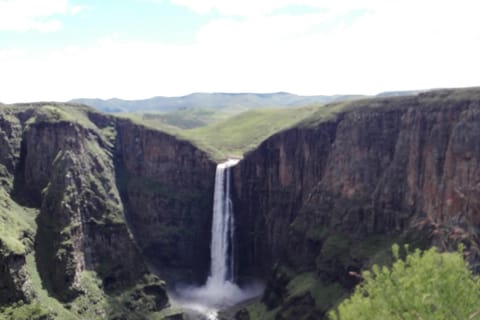
192 metres straight down: Maletsunyane Falls outranks Niagara and claims one of Africa's highest single-drop plunges. Pay M50-100 ($2.50-5) at the community gate, you'll stand on the rim and stare into a basalt throat so tight it swallows sound. Winter (June-August) locks spray into ice sculptures that cling to the rock like white ivy. Conversation dies here.
Ha Kome Cave Dwellings ~M60 ($3 USD)
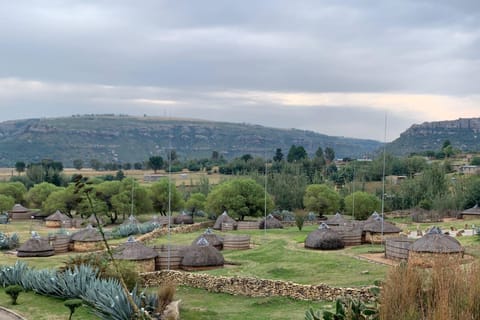
Families lived in the caves at Ha Kome, near Teyateyaneng, right up to the 1900s. They didn't just camp, they built proper rondavel-style homes inside the sandstone cliffs, using the rock itself as roof and wall. Total genius. Pay the community fee, around M60, and a local guide will walk you through the whole complex. You'll see cooking areas where smoke once curled, sleeping chambers carved from stone, grain storage spaces that kept harvests safe. This isn't some polished heritage reconstruction. The hearths are original. The threshold stones are worn smooth by centuries of feet. Real people lived here.
Morija Museum and Archives ~M30 ($1.50 USD)
At M30, Morija's museum punches far above its weight. One of the more substantive small museums in southern Africa, it covers Basotho history from prehistoric times through the founding of the kingdom, the colonial period, and independence. Original missionary correspondence and early maps sit in the archives section. Well-curated, not the dusty-cabinet-of-artifacts type. A reasoned attempt to tell a national story with the objects and documents that survived.
Traditional Sesotho Lunch at a Local Restaurant ~M80-120 ($4-6 USD) for a full meal
M80-120 ($4-6) buys you a full traditional Sesotho meal at the kind of local restaurant that caters to Basotho workers rather than tourists. We're talking papa, stiff maize porridge, plus moroho (cooked wild spinach or leafy greens) and your choice of tripe, chicken feet, or a lamb portion. These places cluster around Maseru's market and bus rank area. Portions are massive. They run on a schedule that assumes you're eating to work, not to experience a cultural moment.
Tips for Free Activities
Make the most of your budget-friendly adventures.
Our guide covers the best areas to stay in Lesotho for every budget.
Where to Stay →Popular Paid Experiences in Lesotho
Looking for something extra? These are the top-rated bookable activities.
Explore More Activities in Lesotho
Didn't see anything interesting yet?
Browse Viator's full catalog of tours, day trips, food experiences, and private guides in Lesotho.
See All Lesotho Tours on ViatorReady to plan your trip to Lesotho?
Now that you've got the research covered, here's where to go next.