Day Trips from Lesotho
The best excursions and trips you can do in a day
Full-Day Trips
Worth dedicating a whole day to explore.
Katse Dam and the Maluti Mountains
$15-25 USD covers dam tour entry, cheap. Add a guide from Maseru and you're looking at $60-90 all-in.185 metres of concrete wedged into a mountain gorge, Katse Dam is Africa's engineering flex. This double-curvature arch dam powers the Lesotho Highlands Water Project, sending water south to South Africa. The guided dam tour breaks down the staggering scale of what they built here. Gorge views alone justify the drive. The reservoir glows blue-green, almost fake against rust-brown mountains.
Maletsunyane Falls (Semonkong)
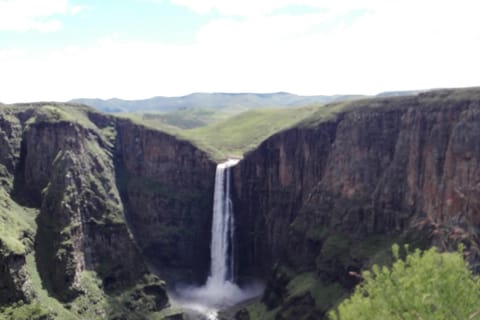
$5-10 USD gets you past the gate, cheap for what waits. Abseil runs $45-55; rope down rock faces, feel the spray. Guided tour from Maseru $70-100; driver, stories, cold beers in the back.192 metres straight down. Maletsunyane Falls hurls itself over a basalt lip in Lesotho, one sheet of water that doesn't break once, Africa's highest single-drop falls and probably the most gut-punching sight in the country. The trail to the bottom is 45 minutes each way. You'll sweat. You'll swear. You'll still call it worth it. Should the cascade alone feel too brief for a full day, Semonkong Lodge will sell you an abseil drop and horse treks that burn daylight fast.
Sani Pass and the Drakensberg Escarpment
$20-30 USD self-drive, fuel, border fees included. You'll save cash. Guided 4WD tours from the South Africa side cost $80-120 per person.The Sani Pass is one of the most dramatic road experiences in southern Africa, a steep gravel switchback that climbs from KwaZulu-Natal into the Lesotho highlands at 2,874 metres. Technically you're crossing into South Africa briefly to access the pass. But most visitors treat it as a Lesotho adventure. The views from the top are extraordinary, and the old Sani Mountain Lodge at the summit claims to be the highest pub in Africa.
Ts'ehlanyane National Park
$10-15 USD park entry. Day visitors welcome at Maliba Lodge restaurantButha-Buthe hides a secret. Ts'ehlanyane sits in the northern highlands, a narrow mountain valley that shelters one of Lesotho's last indigenous forests. The Ts'ehlanyane River slices straight through it. Trails here are decent, not crowded. Maliba Lodge rises from the valley floor. Beautiful even for lunch. Quieter than regional parks. More remote than the road distance suggests.
Malealea and the Mafika-Lisiu Pass
Horse treks cost $15-25 USD per hour, bargain. Entry fee? Just $5. Grab lunch at the lodge for $10-15.Malealea, 80km south of Maseru, has earned its stripes. This village is now the go-to base for horse trekking and village walks in Lesotho. The lodge here isn't new, it started life as a trading store back in the 1800s and never stopped evolving. Even a day trip gets you on a pony threading through the highlands, boots on the trail to Gates of Paradise Pass viewpoint, or a front-row seat at a working Basotho farming community. The drive in via Mafika-Lisiu Pass? Pure drama.
Morija Museum and Historic Mission Town
$3-5 USD museum entry. Easily done for under $15 all-inLesotho's written history started in Morija. The Paris Evangelical Missionary Society arrived in the 1830s, installed the country's first printing press, and created the archive that grew into today's Morija Museum. Forty kilometres from Maseru, this small town delivers more than expected. The museum holds a sharp collection covering Basotho history, geology, and Lesotho's colonial-era diplomacy. Stone buildings line quiet streets. The whole place feels calm, unhurried, and worth the detour.
Ha Baroana San Rock Art Site
Pay $3-5 USD at the gate, guide included. Add a Teyateyaneng weaving workshop and you'll spend $15-20 total.Ha Baroana (sometimes called Ha Khotso or Liphofung) hides Lesotho's easiest San Bushman rock paintings, a rock shelter where eland, hunters, and spiritual figures have stared down the centuries for several thousand years. The site can't match South Africa's large Drakensberg galleries. Yet the setting haunts you, and the local community guide program runs like clockwork. Half the magic? The drive itself, winding through the Phuthiatsana River valley before you even arrive.
Afriski Mountain Resort (from Butha-Buthe)
$40-70 USD for ski lift passes, steep, but the runs deliver. Summer day visitors pay $15-25; equipment rental waits on-site.3,090 metres up in the Maluti Mountains, Afriski is the only ski resort in sub-Saharan Africa outside South Africa, bizarre, delightful, and completely real. Winter (June, August) means skiing and snowboarding. Summer flips the same slopes into prime hiking and mountain biking terrain. The drive up from Butha-Buthe via Moteng Pass ranks among Lesotho's great road experiences, high plateau country that feels like Scotland picked up and dropped into Africa.
Quthing Dinosaur Footprints and San Paintings
$5-10 USD for site entries. Fuel and road costs make this a $30-40 day for self-driversQuthing in Lesotho's southern highlands is a longer drive. Yet the payoff is immediate. You'll see dinosaur footprint sites, including some of the clearest 185-million-year-old tracks anywhere in southern Africa, plus cave dwellings the Basotho used in the 1800s. The cave houses at Masitise, built inside a sandstone overhang, are fascinatingly strange. The local guide program is one of the more authentic in the country.
Half-Day Options
Shorter excursions when time is limited.
Thaba-Bosiu National Monument
$3-5 USD entry. Easily under $10 including transportKing Moshoeshoe I didn't pick Thaba Bosiu by accident. In the 1820s he built his fortress on the 'Mountain of the Night', using the flat-topped peak's natural defenses to shrug off repeated Boer and British attacks. This is Lesotho's most significant historical site. The entire nation essentially began right here. The walk to the summit takes about an hour. The views across the Maseru plains are decent. The interpretive centre at the base does a good job contextualizing what you're seeing.
Roma Valley and National University
$5-10 USD including lunch. Essentially free beyond transportRoma, 35km southeast of Maseru, sits in a striking sandstone valley and houses the National University of Lesotho, a campus with an unexpectedly beautiful setting among layered red rock cliffs. The Trader's Inn there is a reliable lunch spot, and the valley has walking trails to nearby San rock art shelters. Worth it as a half-day combination of scenery, café stop, and a short hike.
Teyateyaneng Weaving Workshops
$0 entry; tapestries and blankets typically $20-150 depending on sizeTY punches above its weight. Forty-five kilometres north of Maseru, this town is Lesotho's craft engine. Basotho weavers spin mohair tapestries and blankets that define the country. Drop into any workshop, you'll watch the process and buy straight from the makers. The St Agnes Mission weavers lead the pack. Expect low-key, no-frills rooms. The work itself? impressive.
Maseru City Walk and Craft Market
$5-20 USD depending on shopping. Street food $1-3Maseru hands back its secrets slowly, give it a few hours, do it right. The Basotho Hat craft market squats near the main circle, traders call prices over piles of wool and wire. Walk the trading stores around the main mall; you'll smell maize meal and see school uniforms stacked like bricks. The cathedral area rings with hymns at dusk, women balancing baskets on heads, men arguing taxi fares. This isn't the highlands, no misty peaks here. But it is a sharp half-day primer on how Basotho live. Use it as your launch pad.
Bokong Nature Reserve (from Butha-Buthe)
$5-8 USD park entryBokong sits right next to Ts'ehlanyane, reachable on the same Roof of Africa road toward Afriski. High altitude. Wetland birdwatching that delivers. Views over the Lepaqoa River gorge, sheer drop, total drama. It's a short detour. Most visitors rush past, hell-bent for Afriski. Their loss. You get the trails to yourself. The bearded vultures? Practically guaranteed.
Day Trip Tips
Make the most of your excursions.
- ✓ Lesotho's day trips hinge on road conditions, 100km on a map can swallow three hours on a mountain pass. Check them after rain. Always keep a 4WD ready for anything beyond the main tarred routes.
- ✓ Early wins the day. Traffic is light, parking spots sit empty, and the sun hasn't yet turned your windscreen into a mirror. Most sights are best before noon anyway. Leave Maseru by 7am for any run over 100km; you'll need that cushion when goats, potholes, or police roadblocks appear.
- ✓ Bring cash. Outside Maseru, ATMs vanish. Most lodges, guide programs, historic site entry points, cash only. LSL (Lesotho Loti) and ZAR (South African Rand) swap at 1:1 everywhere.
- ✓ Pack layers, always. Maseru perches at 1,600 m and the highlands climb past 3,000 m; the mercury can lurch 15 degrees between noon and dusk. Afternoon thunderstorms crash through summer, October, March, like clockwork.
- ✓ Skip the solo wandering. At Ha Baroana and Thaba-Bosiu, a local guide turns piles of stone into living history. The stories matter. The cost is pocket change, $3-5 USD, and every dollar lands straight in community tourism programs. You get meaning. They get paid.
- ✓ Shared taxis, those rattling minibuses, cost almost nothing and run like clockwork along the main drag: Maseru to Morija, Maseru to TY, no problem. Head for the highlands and the story changes; you'll need your own wheels or a pre-booked tour. Hang around for connections in the backcountry and kiss half the day goodbye.
- ✓ Top off the tank before you climb, east and south of Maseru the pumps vanish fast, and nobody wants to do fuel math halfway up a pass.
- ✓ Ha Baroana and Teyateyaneng weaving share the same northern road, knock them out in one run. Morija and Roma sit south of Maseru. Pair them and you won't waste daylight. Ts'ehlanyane and Bokong are practically neighbors in the north. Cluster your stops. Skip the backtracking.
Book These Day Trips
Top-rated excursions you can book now.
Need a base for your day trips?
Our accommodation guide helps you pick the best area to stay in Lesotho.
Where to Stay →Explore Activities in Lesotho
Didn't see anything interesting yet?
Browse Viator's full catalog of tours, day trips, food experiences, and private guides in Lesotho.
See All Lesotho Tours on ViatorReady to plan your trip to Lesotho?
Now that you've got the research covered, here's where to go next.